
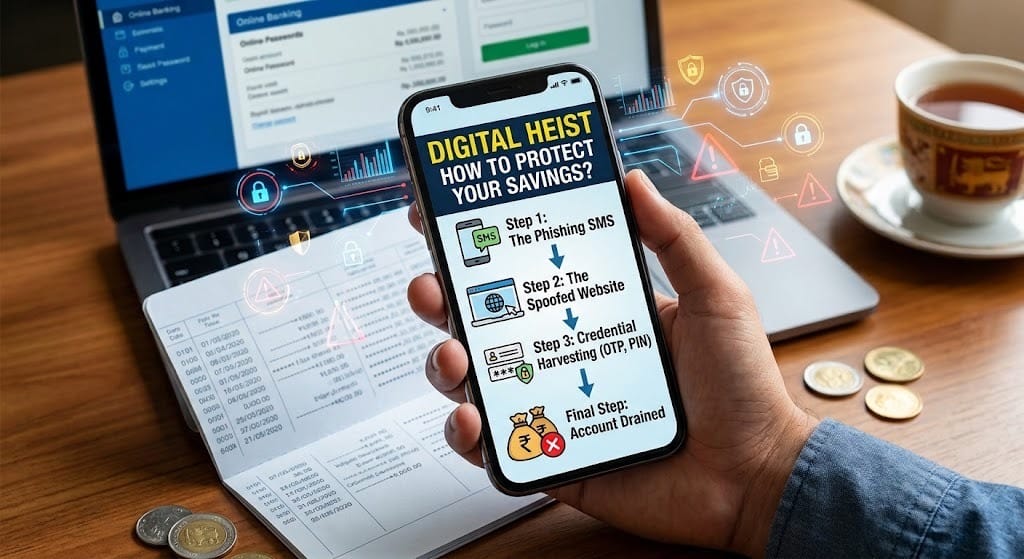
The Anatomy of a Digital Heist: How Sri Lankans Are Being Tricked Out of Their Savings.
It starts with an SMS claiming a CCTV camera captured your vehicle exceeding the speed limit, directing you to a link to pay the fine on a portal that looks identical to the official GovPay platform. Or perhaps it is an urgent WhatsApp message from a contact claiming she lost her phone on a bus and desperately needs a transfer to buy a replacement. In modern financial
crime, the attack vector is rarely a breach of vault security; it is the human on the other side of the screen.
Across Sri Lanka, fraudsters rely on social engineering playbooks to harvest One-Time Passwords (OTPs), personal identification numbers, and banking credentials. Scammers exploit everyday human emotions—fear of a legal penalty, empathy for a friend in distress, or greed sparked by AI deepfake videos of public figures endorsing fake investment returns. Once an OTP is shared over a phone call or entered on a spoofed website, account balances can be drained in seconds. Banking systems operate with continuous multi-layer encryption, real-time
fraud detection engines, and strict regulatory oversight. However, when a user is tricked into sharing access keys, security controls are bypassed. Recognizing these playbooks before the next fraudulent link arrives remains the most critical public service awareness tool.
Discussion
No comments yet — start the conversation.